

Please bear in mind that the following are memories of a seven-year-old. Originally written for my own grandchildren.
As the war in Europe became more intense and the bombing of London far more dangerous, the powers that be decided to evacuate the children to the countryside, where it was hoped they would be safely out of harm’s way. Many thousands of children had their meagre belongings packed into little bags. Labels were placed around their necks, giving details of where they were to be sent, and very tearful scenes followed as mothers said goodbye to their little ones, hoping they would be safe and survive in the peace of the countryside.
We were fortunate in that our grandparents lived in a village in Derbyshire, and so we too had our clothes packed, and off we went to stay with Granny and Grandad Brunt. Aunt Florrie, Dad’s younger sister, was to accompany us. For us, it was a very exciting time, I remember. The train station was huge. The noisy engines gave off vast bursts of steam, and hooters blared as each train departed the station with its precious cargoes. Cazzie and I were dressed like twins in the new frocks which Mummy had made for us. We had a little picnic on the journey, which made us feel very grown-up. Barbie was nine, I was seven, and Cazzie was five years old. Dee was only three, and so she was to stay at home with Mum.
We finally arrived in Ticknall to be greeted with great joy by Dad’s younger brothers and sisters. The older boys were away in Europe, but there were still many mouths to feed and our grandmother, whom I do not think we had met until then, appeared as a small wiry woman, her white hair taken back quite severely in a bun. Her manner was brisk and showed little affection as we had known it, but thank goodness, that was made up for by the rest of the family. Dad’s youngest brother was only seven years older than me, and his youngest sister was only sixteen, so we were to enjoy months of very happy times together.
Poor Cazzie was instantly homesick and cried when tucked into the funny iron cot in which she was expected to sleep. We quickly learnt new words typical to that part of the world. Beryl said that Cazzie was “mardy”. Tea making was described as “mashing” the tea. And when addressing us children a sentence usually finished with “m’dook”, an affectionate expression used by our Grandfather for as long as he lived. So began our lives in the country.
The house had neither running water nor electricity. There was no toilet or bathroom in the house. The toilet was situated at the end of the vegetable garden. It was a brick building with a soil base and we were most amused to discover side-by-side seating! “Toilet paper” was neatly torn newspaper suspended just out of reach from a nail in the wall. To access this “outhouse” we had to go through the farmyard and try to outrun a large cockerel who took every opportunity to chase us!
Grandma’s hens were a very valuable part of her empire. Each day she would prepare the most wonderful smelling bran-mash which she would squeeze through her fingers. Then we would follow her to the farmyard with a huge bowl balanced on her hip. Once inside, she would march around flinging the mash out to the sides and calling to the chickens who were frequently away at the top of the fields scratching for food. We were allowed to gather eggs and these were kept in a large earthenware casserole which was kept in the “front parlour”. This seemed to us a strange place because the room was only used when company came to visit, but it was cool and I suppose in a house with no refrigerator that was possibly a good thing.
Each morning, one of our aunts would black-lead the cooking range until it shone. The large light above the kitchen table would be lowered, refilled with paraffin and its wick trimmed. With twelve of us to care for the days started early and two other aunts stayed home to help Grandma with the chores. The water had to be drawn from the pump at the top of the garden and I enjoyed helping with this job because the Italian prisoners of war would call greetings to us and wave as they marched along the lane for a day’s work in the fields of local farmers. Lovely full cream milk was delivered fresh daily and kept in a huge mixing bowl in the kitchen, covered with a linen cloth. I loved Sunday mornings and hurried downstairs as soon as I heard the milk float approaching. On Sundays the milk was ladled into shiny blue milk cans and if I was quick enough I could run up the drive and the farmer would ladle the milk into my cans. I could then carry them back to the kitchen where Grandma was busy slicing thick pieces of fatty pork from a side of bacon hanging by her range. These would then be placed in a huge skillet and cooked until the fat flowed. This was then poured onto our plates and we would be offered some brown sauce and huge pieces of freshly baked bread to dip into the hot fat! To this day I can honestly say that breakfasts have never tasted so delicious.
Good plain food was our staple diet. Lots of vegetables from the garden and on Sundays we would all sit down to a good roast. One habit I never quite got used to was having the Yorkshire pudding served before everything else. I later learned that this was quite usual in the Midlands and north of England where food was not always plentiful and it helped to fill you up before the luxury of roast beef! The wonderful puffy, crispy puddings would be served to us all and then a large jug of either blackberry or raspberry vinegar was handed around and poured over the pudding. This became a great favourite and nowadays I look forward to the time when the hedgerows are dripping with huge juicy berries. Off I go with the stick which Grandpa made for me. It has a hook on one end so that I can reach the top branches where the biggest, sweetest fruit is to be found. When my baskets are full I hurry home to make my own Blackberry Vinegar – a simply delicious recipe from my childhood days in the country.
The very tight rationing of petrol during the war provided an unexpected bonus for us children. The roads were relatively free of traffic, save for the odd bicycle or pony and trap, so nobody worried if we ventured beyond the garden to find a place to play.
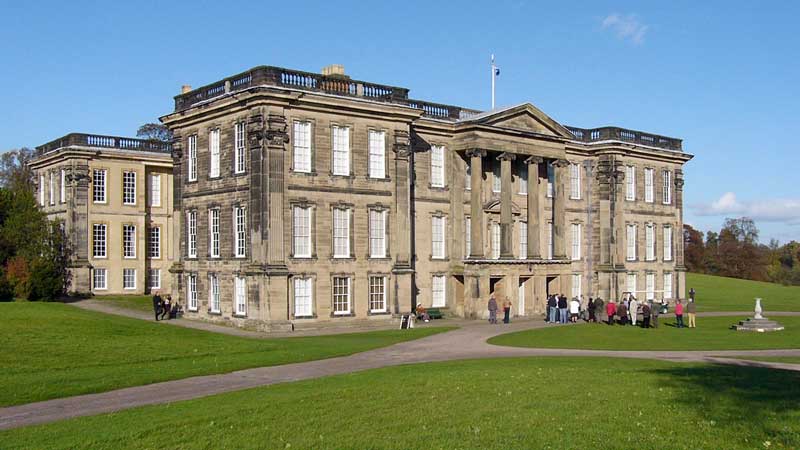
One day a pony and trap came trotting up the road, and to my surprise, Grandma, who was working in the garden at the time, curtseyed as it went past! I was later informed that the lady on board came from the huge estate in the village – I believe her name was Miss Jenny.
For most of the day, the road was quiet, save for the occasional rumble of a tractor driven by one of the Women’s Land Army girls who worked for farmer Flint, who lived opposite. These girls in their smart uniforms of green sweaters, riding breeches, and thick woolly socks, were indispensable on the farms, doing just about every job previously undertaken by the men. They spent many hours ploughing the fields. Most evenings, they could be found herding the cows back down the lane in time for the evening milking. Always friendly and smiling, they made a huge contribution to the enjoyment of our lives away from home.
Other eagerly awaited visitors were the Butcher and the Baker. The Butcher’s van came weekly, carrying all sorts of unusual-looking things. Tripe, liver, hearts and kidneys – known as offal – and later nicknamed “awful”. These animal intestines were not rationed and were not, therefore, restricted to just a few ounces per person. Tripe and onions became a great favourite, as did stuffed hearts – but I doubt very much that you have ever eaten either, let alone been offered it!
The Baker’s visit was a real treat. His van pulled down the drive, and he opened up the side from which the wonderful smell of freshly baked bread escaped. Aunty Beryl introduced us to a special delicacy on these weekly visits. The crust of the loaf was removed, and then “dripping”, the now-set fat from the Sunday roast, was spread onto it. The crust was then cut into fingers, and we all tucked into this decadent little ritual! Such a luxury in those very harsh times.
Your Grandad’s youngest brother, Len, and his friend Gerry Messer also found that they enjoyed having Len’s little nieces around, and they, too, worked hard to make our time away from home a happy one. The old pigsty in the vegetable garden was scrubbed out and repainted to make a great little Wendy house for us. Next, to our great delight, a pond appeared in the bottom field beside our grandmother’s chicken compound. The sides were waterproofed with clay, and the water finally bucketed in. It seemed to take forever to fill, but finally it was ready, and Gerry arrived with a gift of some baby ducklings! They were so lovely, and the pond provided hours of enjoyment.
You might think that this time was all about holidays, but we did, in fact, have to go to school.
What a change from school in London. For a start, there were only two classrooms. Cazzie and I were put in the same class and were taught at the level of the youngest, which for me meant going back to 1+2 = 3 and so on. Barbie was with the other older children and was taught by the headmistress. Our reading books were basic beginner’s pieces – a real change from Enid Blyton’s adventures, which I was enjoying at home. I sometimes felt that I never really caught up once we returned home, particularly in maths, which I learned to dread.
Going to school had its brighter moments, however. Each morning, we walked into the village where a lovely lady called Miss Pegg waited at her gate with a basket of apples, which she handed to each of us as we passed by. These walks were never tiresome, and I am sure we benefited from the fresh air and games we played on our way to and from home.
One event which stands out in my memory was the day our teacher said that she had a little surprise for us. We all sat in a circle and she produced a big bag of sweets!! Apparently, she had saved her sweet coupons for months, and now she shared this wonderful surprise with us all. We may have had only four sweeties each, but at a time when the shelves of the sweet shops were empty and chocolate almost unheard of, this was treasure indeed – to be guarded and hidden from inquisitive aunts and uncles!
Looking back now, I cannot imagine how my grandmother coped with the huge crowd she had to care for daily. Added to which she had the worry of two older boys serving in the army in Europe. But cope she did, and we were never aware of her worries. Looking back, I don’t think Grandma ever had a holiday, or even a day away from her home; just work, work, work.
The seasons passed, and soon it was harvest time. The top fields, as they were called, provided a hay crop. The tractor had a large piece of equipment resembling a big rake attached to its stern. After the grass had been cut, the tractor then circled the fields, raking up the dry grass for about 10 yards at a time. The rake would then be lifted, and neat rows of fresh hay would be deposited at intervals around the fields. This is when the fun began! The whole family had pitchforks, and we would copy the grown-ups, pushing these along the lines of hay and then hoisting them onto our shoulders to be deposited where the hay stack was to be built. Once the pile of hay reached the height of a man’s shoulder, we children would be tossed up on top where we were encouraged to jump about to compact the hay. It was like a trampoline without the bounce! By the end of the day, a wonderful, tidy hayrick stood proudly in place, and the winter feed for the animals had been safely harvested.
The fruit bushes and apple trees were next, and the ladies busied themselves bottling the fruit and storing all the beautiful, rosy apples. Potatoes were dug from the ground and stored in huge sacks in the barn. All these tasks gave a real meaning to “all is safely gathered in,” ’ere the winter storms begin”! It is quite sad that you younger members of the family will probably never experience this, because it was such a fun, happy time, the whole family working and enjoying these days together.
Back at home in London, our mother was missing her little brood and finally decided that it was time for us to leave and return home. I don’t actually remember saying goodbye, but it was to be the last time I saw my grandparents.
After the war, the aunts and uncles came to stay with us, but never Granny and Grandad. We had an education to resume, and then jobs to find. It was nearly fifty years before I returned to the village. Dee and I went to the old house which was now a smart home, with plumbing and electricity! But the pigsty-playhouse was still there, and the water pump, and amazingly, the duck pond! The apple trees still bore their rosy trophies, and the village looked much the same as we had remembered it. Farmer Flint’s home and the surrounding barns were now fancy apartments for young people working in Derby. Gone was any sign of land girls or prisoner of war camps, but the memories are still very much alive, and I hope you will one day get to visit and enjoy for yourselves an hour or two in the beautiful English countryside where your Grandmother and her sisters spent such a happy time whilst the rest of the world was at war.



Leave a Reply